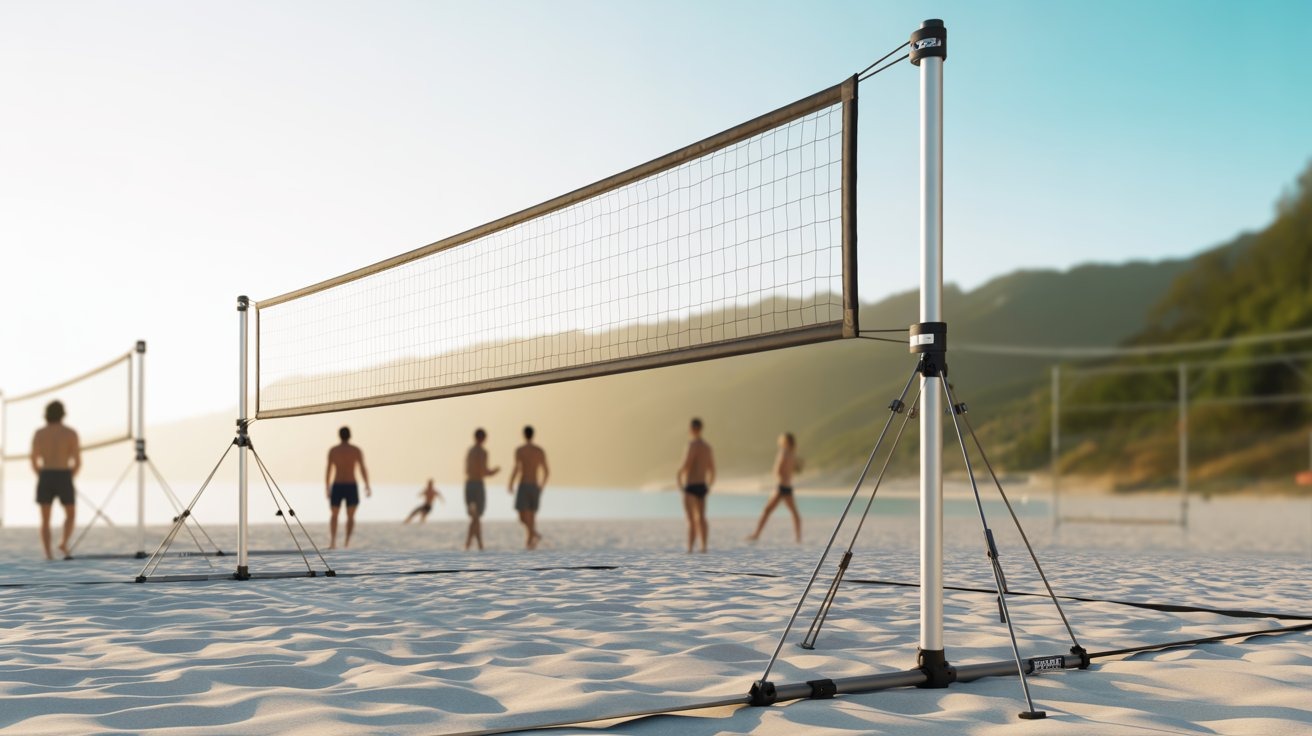
I’ll be honest… if you love volleyball, there’s nothing better than having your own portable net system. You can set it up at the park, in your yard, at the beach, or even in the driveway if you’re creative.
The truth is, volleyball nets used to be a pain. They were heavy, confusing, and took forever to assemble. But now portable systems are way better, faster, and surprisingly strong.
If you’re thinking about buying one, or you’re confused by all the options, this guide will make things super simple.
What Is a Portable Volleyball Net System
A portable net system is a lightweight volleyball setup that you can carry anywhere. It usually includes:
- A net
- Poles
- Boundary lines
- Stakes or anchors
- A carrying bag
Think of it as your volleyball-to-go package.
Some are made for families and casual play. Others are strong enough for serious training or competitive games.
Why Portable Nets Are So Popular
Honestly, the biggest reason is freedom. You don’t need a gym. You don’t need a court. You just need a flat surface and a little space.
Here’s what people love:
1. Easy to set up
Most nets take 5–10 minutes. Even faster once you get the hang of it.
2. Lightweight and travel-friendly
They fit in a car trunk, or you can carry them like a backpack.
3. Great for all ages
Kids, teens, adults… Everyone can play.
4. Affordable
A solid portable net costs way less than permanent court equipment.
5. Multi-surface use
Grass, sand, indoor floors most systems work anywhere.
Types of Portable Volleyball Net Systems
Not all nets are the same. Choosing the right type depends on where and how you play.
1. Recreational Portable Net Systems
These are perfect if you just want fun games with family or friends.
Best for:
- Backyards
- BBQ gatherings
- Casual play
- Kids learning volleyball
Features:
- Lightweight poles
- Basic net
- Simple tension system
2. Competitive / Training Portable Systems
These are stronger and offer better stability.
Best for:
- High school training
- Club teams
- Athletic workouts
- Players practicing jumps and power hits
Features:
- Thick, durable poles
- Strong net tension
- Better grounding system
3. Beach Volleyball Portable Nets
Designed specifically for sand play.
Best for:
- Beach trips
- Sand courts
Features:
- Extra-strong stakes
- Waterproof materials
- Wider court lines
4. Adjustable-Height Portable Nets
These are amazing because you can adjust the height for:
- Men’s volleyball
- Women’s volleyball
- Youth volleyball
- Beginner training
- Multi-sport use (badminton, pickleball)
These nets give you more value for the money.
What to Look for When Buying a Portable Volleyball Net System
Think about this as a quick checklist.
1. Stability
You need a net that stays tight and doesn’t fall when the wind blows or when players bump it.
Look for:
- Thick poles
- Strong base or stakes
- Guyline tension system
2. Net Quality
A cheap net will sag. A good one stays tight.
Look for:
- PE or nylon material
- Reinforced edges
- Weather-resistant stitches
3. Portability
If it’s too heavy, you’ll avoid using it.
Check:
- Total weight
- Carrying bag quality
- Length of poles
4. Height Adjustability
Great if you plan to use the system for:
- Kids
- Co-ed games
- Practice drills
5. Setup Time
Look for systems that take under 10 minutes to assemble.
6. Surface Compatibility
Make sure the net can be used on:
- Grass
- Sand
- Indoor floors
7. Durability
Think long-term. It’s better to invest a little more for stronger poles and netting.
Recreational vs. Competitive Portable Nets
| Feature | Recreational Nets | Competitive Nets |
| Stability | Medium | High |
| Setup Time | Very fast | Fast |
| Weight | Light | Medium-heavy |
| Durability | Basic | Strong |
| Best For | Families | Players/Teams |
| Price | Affordable | Higher |
How to Set Up a Portable Volleyball Net
Honestly, the setup is easier than it looks. Here’s the basic process:
1. Find a flat area
Grass, sand, or turf works best.
2. Lay out the court lines
This helps you keep the net centered.
3. Insert or secure the poles
Push them into the ground or attach the base depending on your system.
4. Hook the net to the poles
Make sure the edges are even.
5. Tighten the tension ropes
This is the secret to keeping the net from sagging.
6. Test stability
Lightly shake the poles or jump near them.
If it feels weak, tighten or re-anchor.
That’s it you’re ready to play.
Tips to Make Your Net Last Longer
Think about this… a volleyball net is like any sports gear. Treat it well, and it will last years.
1. Don’t leave it outside overnight
Moisture weakens the material.
2. Clean the net after beach use
Rinse off sand and saltwater.
3. Store it in a cool, dry place
Avoid heat damage.
4. Check the ropes for wear
Replace them before they break during a game.
5. Transport it carefully
Stuffing it into a car can bend the poles.
This little care goes a long way.
FAQs
Are portable volleyball nets good for serious training
Yes. Some portable systems are strong enough for competitive play and team practices.
Can you use a portable net on concrete
Yes, but you’ll need a weighted base instead of stakes.
How tall should a volleyball net be
- Women’s height: 7 feet 4 inches
- Men’s height: 7 feet 11 inches
- Youth height: varies depending on age
Do portable nets work on the beach
Yes. Many come with sand stakes for strong grip.
What is the best portable volleyball net for backyard use
Choose a lightweight recreational set with adjustable height and strong stakes.
Summary
Portable net systems for volleyball make the game easier, more fun, and accessible anywhere. Whether you want backyard matches, beach games, or team practice, there’s a system that fits your needs.
Just focus on stability, durability, height adjustability, and surface compatibility. Get the right net once, and you’ll enjoy volleyball for years.