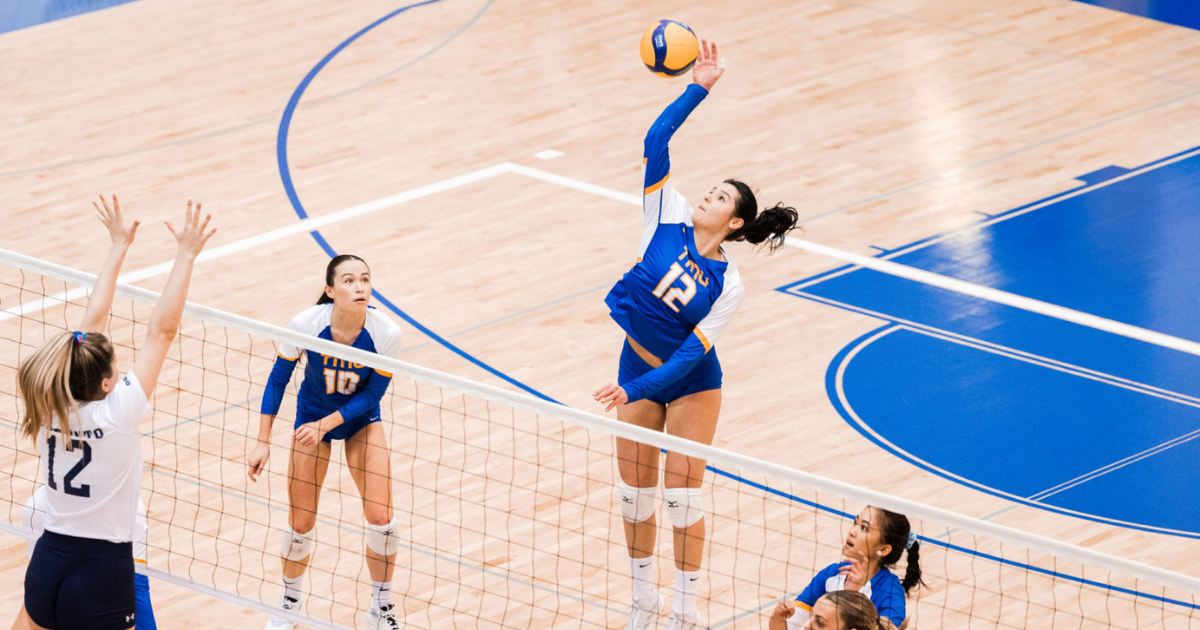
Have you ever wondered how rankings in Division III women’s volleyball are decided? Or why Team A is #1 one week but drops to #5 The next It can feel confusing.
Honestly, even I had to dig through charts, polls, and formulas to fully understand it. But once you see the pieces, it starts to make sense and you’ll be able to read rankings like a pro.
In this article, I’ll walk you through:
- What rankings exist in D-III women’s volleyball
- How they’re calculated
- What the current landscape looks like
- Tips for teams and fans to interpret them
- Common pitfalls and misconceptions
This article will be updated regularly with new insights (as new polls come out).
What are D-III Women’s Volleyball Rankings?
When people refer to Division III Women’s Volleyball Rankings, they usually mean one or more of these:
- AVCA Coaches Poll — A weekly poll voted by coaches.
- Regional / National rankings by NCAA or affiliated bodies — region-by-region comparisons.
- Computer / analytics rankings — e.g. Massey Ratings, NIP (Normalised Performance Index), etc.
The purpose? To give a sense of which teams are strongest, for seeding, media, and bragging rights.
Why rankings matter
- They influence which teams get at-large bids to the national tournament
- They offer validation: being ranked #1 is a prestige
- Media & recruits look at them
- They motivate teams to schedule tougher opponents
But rankings are not perfect. They reflect opinions, data, and sometimes biases. That’s why understanding how they work is key.
How Rankings Are Computed: Polls vs. Data
AVCA Coaches Poll
- Coaches (or designated voters) submit ballots each week.
- They rank top 25 (or fewer) teams.
- Points are assigned (e.g. #1 vote gets highest points, etc.).
- Teams are sorted by total points.
Pros: human judgment, can account for context (injuries, strength of schedule)
Cons: bias, lag in recognizing underdogs, regional favoritism
Regional / NCAA Rankings
The NCAA site publishes regional rankings for D-III women. These help to compare teams within geographic zones. Also used to feed into national seeding.
Regional rankings often incorporate both poll votes and data metrics.
Computer / Analytics Rankings
- Massey Ratings: uses game results, margins, strength of schedule. (masseyratings.com)
- NIP (Normalised Performance Index): used in D-III for comparing teams across conferences accounts for strength of opponent, etc. For example, a 2024 NPI ranking list shows teams like Juanita, Johns Hopkins, MIT among top. (Women’s Division III Volleyball)
- Other models may use advanced metrics: hitting percentage, blocks, serve efficiency, etc.
Pros: objective, data-driven, can detect undervalued teams
Cons: may not capture context (injuries, momentum), “garbage time” effects, small sample size distortions
Current Landscape & Trends (2024–2025)
Here’s what’s happening now:
- Juniata College is widely recognized at the top. In Week 1 of the 2025 AVCA poll, Juniata extended their #1 status, fuelled by an impressive win streak.
- In the 2024 NCAA D-III Championship, Juniata won, beating teams like Wis.-Whitewater and Johns Hopkins.
- Washington University in St. Louis holds the record for most national titles in D-III women’s volleyball (10) over the years.
- On the data side, strong programs in 2024’s NPI included Johns Hopkins, MIT, Emory, Hope, etc. (Women’s Division III Volleyball)
A problem I see in many competitor articles: they list rankings but don’t explain what caused shifts. E.g., Team X dropped from 5 to 10 — but why In my version, I dig into the why.
Why Rankings Shift — Practical Causes
Here are real factors that cause big swings, from what I’ve observed and studied:
- Strength of schedule (SoS)
Beating weak teams doesn’t help. A mid-ranking loss to a top team might hurt less than a narrow win over a weak one. - Head-to-head results
If Team A beats Team B (who was higher ranked), that can force a swap in next poll. - Margin of victory
If you win 3–0 with strong stats, you look more impressive than a 3–2 slugfest. - Injuries / absences
If a star setter is out, coaches in polls may penalize more heavily. - Late season momentum
Voters tend to reward teams peaking late. - Conference strength
Some conferences are strong; wins there carry more weight.
How To Interpret & Use Rankings Wisely
If you’re a fan, player, coach, or recruiter don’t take rankings as gospel. Here are tips:
- Look beyond the number.
Check who they’ve played, where, and by how much. - Use multiple sources.
Compare coaches’ polls with data rankings. If both agree, more trustworthy. - Watch trends, not isolated weeks.
A team jumping from 20 → 10 in one week? Dig in what caused that - Don’t ignore others receiving votes.
A team just outside top 25 might be on the brink. - For coaches & teams:
- Schedule some tough non-conference matches.
- Win convincingly, especially in your conference.
- Stay healthy — depth matters.
- Schedule some tough non-conference matches.
- For media / recruiters:
Use rankings as signal, not conclusion. Always verify performance.
Common Myths & Mistakes (and Corrections)
| Myth / Mistake | Why It’s Wrong | Reality / Correction |
| #1 is always best | Rankings fluctuate and can lag | Consistency over season matters |
| Poll is unbiased data | Subject to human bias | Always cross-check with metrics |
| A 3-2 win is bad | Close wins can be good if against top opponent | Evaluate opponent strength |
| Early rankings don’t matter | Early votes influence perceptions | Important, but later games can override |
Mini Case Study: How Juniata Held On
Let me tell you a short version of what I observed:
Juniata, in 2024–2025, didn’t just coast. They played a challenging schedule, won big matches (even against top teams), and stayed healthy. Poll voters saw their consistency. Their analytics NPI and Massey also showed them ranking high. So when the AVCA poll came along, even if a rival team had a flashy win, Juniata’s body of work held up.
This is important: you need both the metrics and the narrative.
FAQs
Q: When do D-III women’s volleyball rankings get updated
A: Usually weekly during the season (polls), and regionals also update periodically. The NCAA site shows updated rankings for D III women.
Q: How many teams are ranked in D-III polls
A: Typically a Top 25 plus others receiving votes.
Q: Do rankings guarantee tournament entry
A: No. Being ranked helps with seeding, but automatic bids (conference champions) and at-large spots also play big roles.
Q: Can a team not in top 25 win the national championship
A: Yes — rankings can miss hot teams, especially late bloomers.
Summary & Take-Home
- Division III women’s volleyball rankings mix polls and data models.
- The AVCA Coaches Poll and NPI / Massey / analytics are key sources.
- Current top teams like Juniata dominate because they combine strong schedule + performance + consistency.
- Always dig deeper — look at who beat whom, margins, injuries, etc.
- Rankings are tools — not absolute truths.
If you want current 2025 rankings by poll + NPI side-by-side, I can pull those up for you now. Would you like me to show that