
Serving is one of the most crucial skills in volleyball because it starts every play and sets the tone for the game. Even if you don’t have access to a gym or court, you can still improve your volleyball serve at home with the right drills and consistency. In this Volleyskill guide, you’ll learn how to strengthen your serve, increase accuracy, and gain more control — all from your home.
Why Volleyball Serve at Home Matters
A good serve can make a big difference in the outcome of a match. It can
- Put pressure on the opponent
- Earn direct points (aces)
- Break the other team’s rhythm
- Boost your team’s confidence
You don’t need a court to build these skills. With focus and dedication, you can train effectively right at home.
1. Master the Proper Serving Technique
Start with the basics before focusing on power or speed. A correct serving form ensures consistency and accuracy.
Steps for an Overhand Serve:
- Stand with your non-dominant foot slightly forward.
- Hold the ball at chest level with your non-dominant hand.
- Toss the ball about 2–3 feet above your head.
- Swing your dominant arm back, then forward smoothly.
- Hit the center of the ball with the heel of your hand.
- Follow through naturally toward your target.
2. Practice Toss Accuracy
A consistent toss is the foundation of a strong serve. You can practice this drill anywhere at home:
- Stand in your serving position.
- Toss the ball and let it fall back into your hand without moving your feet.
Repeat this 20–30 times a day. A steady toss will improve your control and timing.
3. Strengthen Your Serving Arm
To serve with more power and accuracy, you need strong arms, shoulders, and core muscles. Try these simple exercises at home:
- Arm circles (3 sets of 15 reps forward and backward)
- Wall push-ups for shoulder strength
- Resistance band swings to mimic the serving motion
- Planks to build core stability
Volleyskill Tip: Focus on technique rather than heavy weight. Power comes from balance and control.
4. Work on Footwork and Balance
Your legs help generate power in a serve. Practice your foot positioning and balance regularly.
Try these drills:
- Shadow serving (practice the motion without hitting the ball)
- One-leg balance drill (stand on one foot for 30 seconds)
- Step-through motion (practice stepping into your serve for power)
5. Focus on Ball Contact and Follow-Through
To improve accuracy, work on clean ball contact. Use a soft ball or practice against a wall.
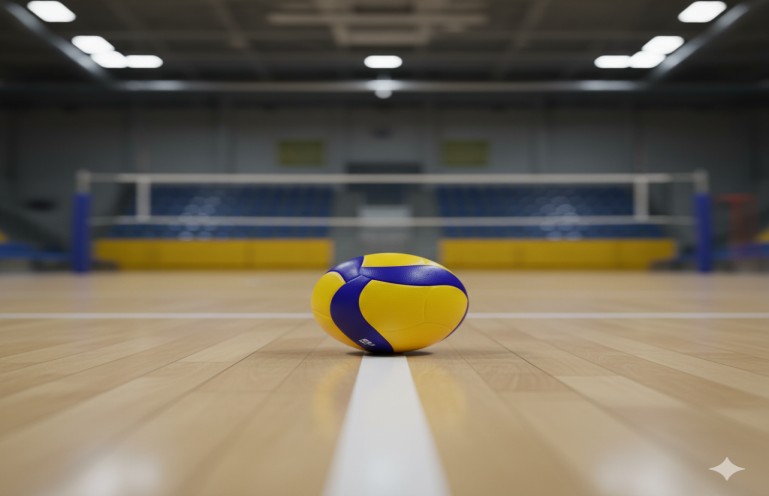
- Aim for the ball’s center.
- Keep your wrist firm when hitting.
- Follow through naturally instead of stopping your arm suddenly.
6. Visualize Game Scenarios
Mental training improves focus and confidence. Visualization helps you prepare for real matches.
- Close your eyes and imagine a perfect serve.
- Picture your toss, arm swing, and the ball landing inbounds.
- Repeat this exercise before each practice session.
7. Practice Different Serve Types
You can train your body for different serving styles even at home.
| Serve Type | Description | Practice Focus |
|---|---|---|
| Underhand Serve | Simple and beginner-friendly | Focus on control and direction |
| Overhand Serve | Common and powerful | Improve toss and arm timing |
| Topspin Serve | Adds spin and speed | Strengthen wrist movement |
| Float Serve | Moves unpredictably | Practice flat, clean contact |
Once you’re comfortable with one type, challenge yourself to learn another for versatility.
8. Build a Routine
Consistency is the key to improvement. Create a short daily or weekly serving routine.
Example Home Practice (20–30 minutes):
- 5 minutes warm-up (jumping jacks, stretches)
- 10 minutes toss and shadow serve practice
- 10 minutes wall hitting or resistance drills
- 5 minutes visualization and breathing exercises
Stick with this routine regularly, and you’ll notice steady progress in your serving technique.
FAQs
1. Can I practice volleyball serving without a net?
Yes, you can. Use a wall, backyard, or open space. Focus on toss accuracy, arm swing, and control rather than height.
2. What is the easiest serve to learn at home?
The underhand serve is best for beginners. It helps you understand control, ball direction, and contact before trying advanced serves.
3. How can I make my serve more powerful?
Work on strengthening your arms, shoulders, and core. Step into your serve and use your entire body for more power.
4. How often should I practice serving at home?
Try to practice four to five times per week for at least 20 minutes each session. Short but consistent practice works best.
5. Can I track my improvement at home?
Yes. Record your serves or count how many accurate tosses you make daily. Compare results weekly to see your progress.
Conclusion
You don’t need a volleyball court to become a great server. By focusing on proper form, consistent practice, and physical conditioning, you can develop a stronger and more accurate serve right at home. With Volleyskill’s expert advice, every serve you practice brings you closer to mastering the game. Keep training, stay consistent, and serve your way to success.